








INFO
More Information About Us


Hollow Rotary Platform Selection Guide: Complete Process from Load Calculation to Model Confirmation
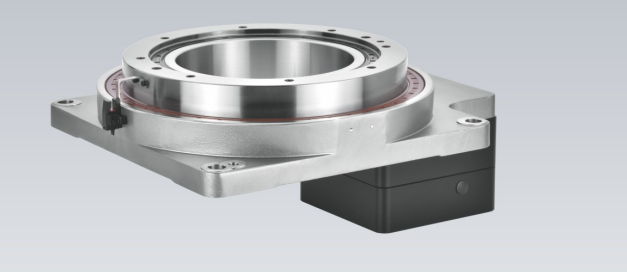
Step 1: Clarify Working Condition Parameters – Turntable Diameter, Speed and Load Weight
The starting point of selection is to confirm three basic parameters: turntable diameter (customer working surface size), planned rotational speed per minute, and disk load weight. The turntable diameter determines the working range of the platform, while speed and load directly affect the calculation results of torque and inertia. It is recommended to finalize these three parameters in the early stage of the project, and all subsequent calculations will be carried out around them.
Step 2: Calculate Overturning Moment – Core Index for Eccentric Load Scenarios
Overturning moment is the most easily overlooked but critical factor in model selection. When the load is not evenly distributed on the center of the turntable, overturning moment will be generated. The calculation formula is as follows:
Overturning Moment M = Load Weight × Eccentricity
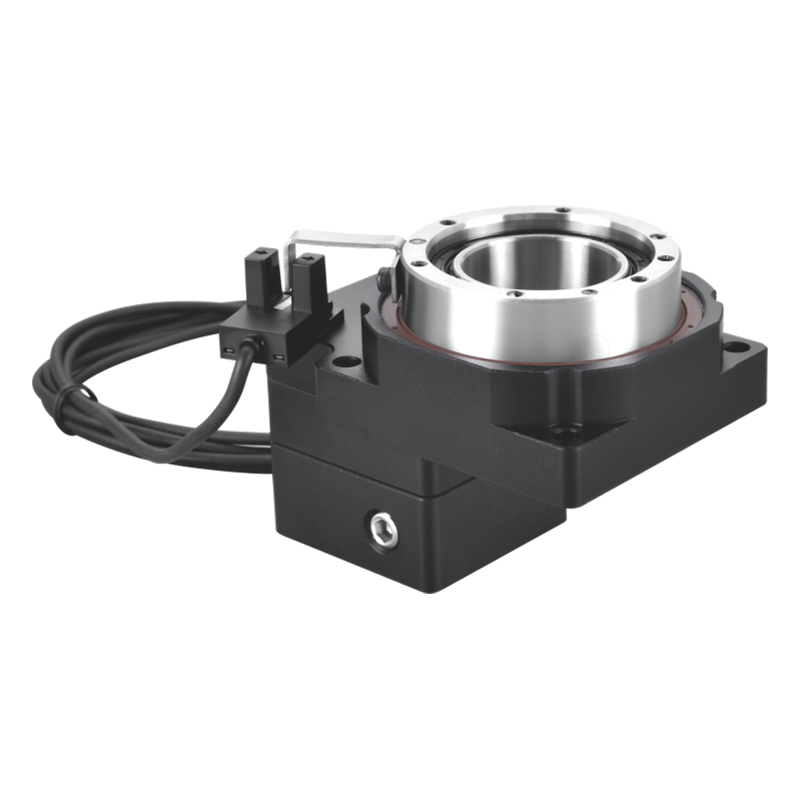
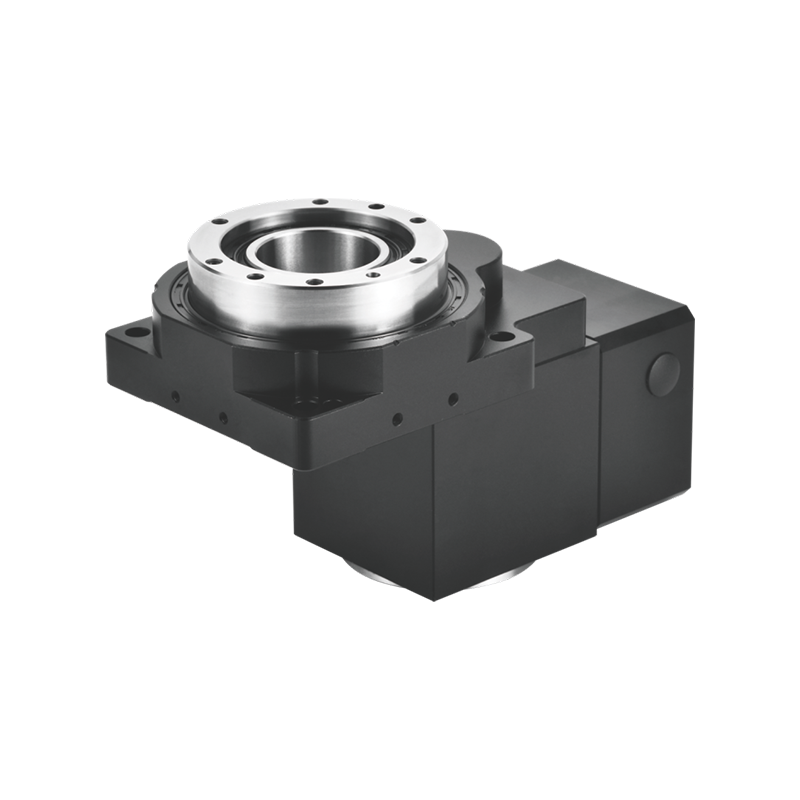
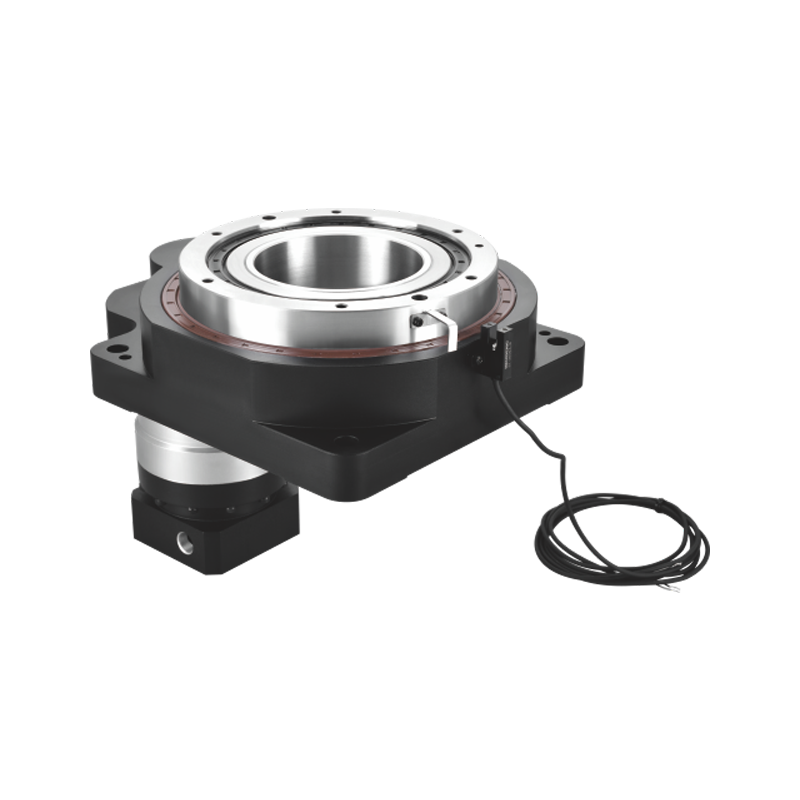
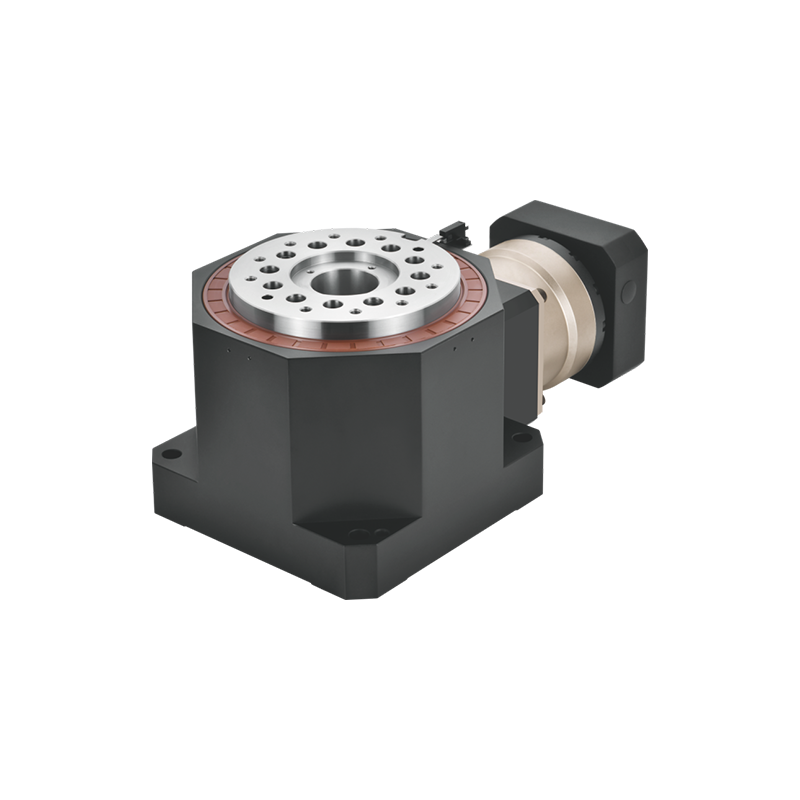
Actual tests show that many equipment failures are not caused by insufficient torque, but by excessive overturning moment beyond the allowable value of the platform. Zhuochuang’s heavy-duty series (ZCTZ) and reinforced series (ZCTJ) adopt structural reinforcement specially for eccentric load scenarios such as side mounting and hoisting. An anti-overturning stable ring is arranged in the middle hole of the turntable, which effectively solves the problem of excessive overturning moment.
Step 3: Calculate Moment of Inertia – Matching Motor Response Speed
The calculation of load moment of inertia directly determines the response speed and control accuracy of the motor. Unreasonable inertia matching will lead to slow motor response or excessive vibration. For common disc loads, the inertia can be estimated by the following formula:
J = ½ × m × r²
In the formula, m refers to load mass (kg), and r refers to load turning radius (m). After calculating the load inertia, it needs to be matched with the rotor inertia of the selected motor. Generally, it is recommended that the load inertia does not exceed 5-10 times of the motor inertia.
Step 4: Calculate Torque and Speed Ratio – Confirm Power Matching
The calculation formula for the required torque T is as follows:
T = 9550 × P × i × η / n
In the formula, P is motor power (kW), i is reduction ratio, η is transmission efficiency (the efficiency of Zhuochuang hollow rotary platform is about 90%), and n is input speed (rpm).
The selection logic of speed ratio is: Input Speed ÷ Output Speed = Final Speed Ratio. During selection, ensure that the reducer torque is greater than the servo motor output torque multiplied by the speed ratio.
Step 5: Confirm Accuracy Grade – Repeat Positioning Accuracy and Backlash
The repeat positioning accuracy of Zhuochuang hollow rotary platform can reach ±5 arcseconds. This accuracy level is sufficient for most precision positioning scenarios, including visual inspection, laser processing, electronic assembly and more. It should be noted that higher accuracy usually means higher cost. It is recommended to select the accuracy grade according to actual working conditions to avoid performance surplus.
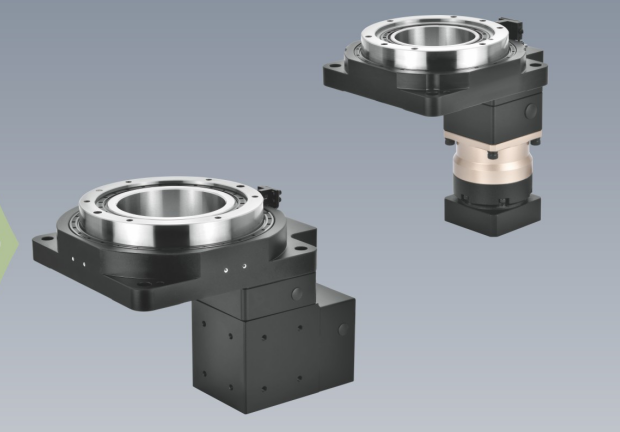
Selection Summary: Quick Selection Table for Zhuochuang Series Products
Application Scenario | Recommended Series | Core Advantages |
Conventional Precision Positioning | ZBT Aluminum Alloy Series | Lightweight, cost-effective |
Heavy-duty / Side Mounting / Hoisting | ZCTZ Heavy-duty Series, ZCTJ Reinforced Series | Anti-overturning design, high rigidity |
Limited Installation Height | ZBTR Integrated Angle Series | Compact structure, space-saving |
Large Aperture Wiring | ZCTK Steel Shell Series | Maximum aperture 150mm |
High Precision Requirements | ZCH Helical Gear Series | Body speed ratio 30, high precision |
If you have special working conditions or selection doubts, welcome to contact Zhuochuang professional technical consultants for one-on-one consultation.
Team online
Vip services
Different solutions
High quality products
12H response
Continuous service
Wechat:+86-15919891652
Add:Room 202, Building 3, No. 12, Futang Street, Dalingshan Town, Dongguan City, Guangdong Province,China
E-mail:473946087@qq.com